
Whatever It Takes? Starmer’s Asbestos Pledge Meets Reality
When the Prime Minister declared in October 2024 that “whatever we need to do to reduce that risk, we absolutely need to do” about asbestos in schools and hospitals, his words carried weight. Fifteen months later, with the consultation period now closed, those words are being tested against a decision that campaigners fear represents yet another government U-turn.
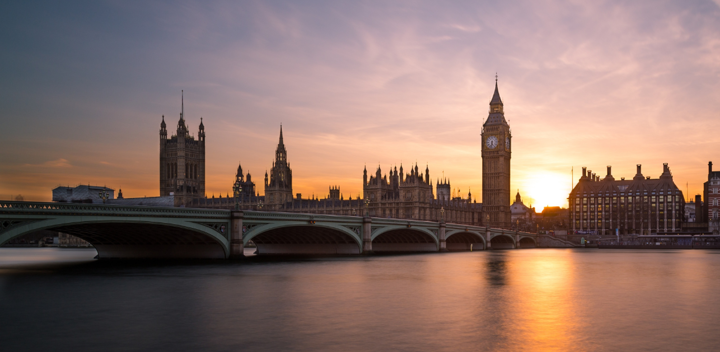
On 21 October 2024, Sir Keir Starmer backed the Daily Mail’s campaign to strip deadly asbestos from public buildings with language that left little room for ambiguity. Standing in a London Ambulance Service centre, having just met a woman requiring a double lung transplant because of asbestos exposure, he called it an “awful, awful killer” and committed to doing whatever was necessary to reduce the risk.
Fifteen months on, and with the Health and Safety Executive consultation having closed on 9 January 2026, HSE’s preferred options suggest reliance on improved guidance rather than mandatory accreditation for the organisations conducting these surveys, despite having statistical evidence showing that accredited asbestos surveyors deliver significantly better quality work.
The irony is hard to miss. Asbestos surveys are the foundation of everything else in the regulatory chain. They tell building owners what asbestos is present, where it is located, and what condition it is in. Get the survey wrong and workers disturb materials they do not know are there, exposure happens despite apparent compliance, and people die decades later from diseases that were entirely preventable.
The Evidence Points One Way
Analysis of HSE’s own research data shows that accredited organisations score 22% higher on average than non-accredited ones. There is only a one in 6,000 chance the difference occurred randomly. In most research contexts, this would be considered conclusive.
Accredited organisations also deliver more consistent quality, with a standard deviation of 89 in scores compared to 105 for non-accredited organisations. This consistency means fewer nasty surprises when someone commissions a survey.
Yet HSE is proposing to continue with what they call “enhanced guidance” to help customers make informed choices. The problem is that this approach has already failed. Analysis of annual declaration data from UKAS-accredited organisations shows that around 63% of asbestos surveyors in Great Britain operate without accreditation. HSE has been strongly recommending accreditation for over 20 years. If customers were listening, non-accredited surveyors would be a shrinking minority struggling to find work. Instead, they represent nearly two-thirds of the workforce and appear
commercially successful.
Something is clearly not working. Either customers do not know about HSE’s recommendation, do not understand why it matters, cannot tell whether a surveyor is accredited, or simply ignore the advice. Whichever explanation applies, the current approach is demonstrably ineffective.
When Guidance Fails
HSE’s own Post Implementation Reviews add weight to the case for regulation rather than guidance. The 2022 PIR found that half of those doing non-notifiable asbestos work did not even know they had duties under the regulations. If people do not know they have basic legal obligations, expecting them to make sophisticated judgements about surveyor competence seems optimistic at best.
The reviews also showed that between 2017 and 2022, HSE revised their guidance and redesigned web pages to address confusion. The result? A fifth of dutyholders still had not heard of the new guidance, and a third of those who had were not using it. Targeted improvements over five years did not eliminate confusion or guarantee usage even among those who were aware of the changes.
This matters because, according to HSE’s consultation document CD 329, there are roughly 38,000 licensable removal jobs annually, plus 24,000 to 28,000 notifiable non licensed jobs and an unknown number of non-notifiable jobs. The scale is enormous. If work is spread in line with surveyor numbers, something approaching two-thirds of these jobs may be relying on surveys from non-accredited organisations.
Work on the 2027 Post Implementation Review is already underway, which will examine how recommendations from previous reviews have been implemented. This creates an accountability mechanism, but also raises the question of how many more review cycles are needed before meaningful action is taken when, according to both HSE and the Daily Mail’s reporting, 5,000 people are dying from asbestos related diseases annually.
The Parliamentary Dimension
The contrast with asbestos analysts is telling. For four-stage clearance work, accreditation is mandatory. There is no ambiguity, no need for customers to judge competence, no possibility of accidentally hiring someone unqualified. The requirement creates a clear baseline. Yet surveyors, whose work underpins everything that follows, have no such protection.
This inconsistency is particularly striking given that the Work and Pensions Committee recommended mandatory accreditation for asbestos surveyors in April 2022. The committee pointed to the unlevel playing field created by requiring accreditation for analysts but not surveyors. The government agreed to take the recommendation forward.
When the previous government’s formal response in July 2022 rejected the recommendation, the committee chair described the decision as “extremely disappointing”, arguing that a clear target was needed as part of a joined-up strategy to prevent needless deaths.
Ministerial Positioning
Recent ministerial correspondence provides insight into the government’s position. Writing the day after the consultation closed, the Minister of State for Social Security and Disability acknowledged “a particular interest” in the implementation of the Select Committee findings, having previously chaired that committee.
The minister confirms no decision has been made and emphasises that HSE is following “standard Government processes” in developing policy proposals. The minister states satisfaction that HSE is committed to fulfilling its role as an independent, evidence-based regulator and will “continue to monitor emerging evidence and developments to asbestos exposure risks.”
The minister confirmed that industry submissions have been logged as part of the consultation response and encouraged stakeholders to provide views and evidence through the consultative process. Decisions will be made following analysis of responses.
For campaigners, this represents both an opportunity and a risk. The consultation window has now closed, and HSE’s preferred options appear to favour enhanced guidance over mandatory requirements.
The Cost Question
Cost concerns are mentioned repeatedly in HSE’s consultation, with estimates ranging from £14.7 million to £377.7 million annually. That twentyfold variation suggests the figures are highly speculative. More importantly, analysis of the market shows around 180 organisations already hold UKAS accreditation and absorb these costs successfully. If the costs were prohibitive, these businesses would not exist. The fact that a substantial accredited sector operates commercially suggests the costs are manageable for
professional organisations.
Industry sources point out that direct UKAS fees are relatively modest compared to the real costs of compliance. The larger burden relates to requirements like 5% resurveys and method witness audits that demonstrate quality assurance. But these are requirements of HSG 264, which applies to all surveyors regardless of accreditation status. The only way non-accredited surveyors can offer lower prices than accredited ones is that they face no obligation to demonstrate compliance with HSE’s own guidance.
The cost argument against mandatory accreditation turns out to be an argument for allowing operators who are never required to formally demonstrate compliance to continue winning work on price against those who are.
The Human Cost
With 5,000 people dying from asbestos-related diseases every year, roughly 14 deaths a day, the public health imperative is substantial. The Daily Mail reported that since 1980, at least 1,400 teachers and support staff and 12,600 pupils have died from mesothelioma caused by asbestos exposure. The number is expected to increase sharply as ageing school buildings expose more people to risk.
When Sir Keir Starmer said in October 2024 that “whatever we need to do to reduce that risk, we absolutely need to do”, he was responding to these stark figures. The Prime Minister called asbestos “an awful, awful killer” and said the way it kills people is “just dreadful”. He committed to doing whatever is
necessary.
Evidence Limitations or Convenient Excuse?
The consultation document acknowledges “very limited evidence” about survey quality, yet uses this as a reason not to mandate accreditation. There is a logical problem here. If the evidence is too thin to support mandatory accreditation, it must also be too thin to conclude that enhanced guidance will succeed where current guidance has failed.
HSE conducted research that showed clear statistical results, then called the evidence insufficient. When asked to provide the underlying data that would enable more precise analysis, they declined. When a study finds strong statistical significance and a large effect size, the normal response is to do a bigger study to confirm the finding, not to dismiss the result because the sample was small.
An organisation that cites evidence limitations while withholding data that would address them invites questions about its approach.
What Happens Next
The ministerial response reveals a government navigating competing pressures. Personal commitment to the Select Committee findings remains evident, but so does reliance on HSE’s “independent, evidence-based” approach. The consultation process has concluded, and analysis of responses is now underway. The question is whether the weight of evidence and stakeholder input will be sufficient to shift HSE from its preferred position.
The test of Starmer’s October 2024 commitment is playing out right now in an analysis process that most people will never hear about. If the government opts for enhanced guidance over mandatory accreditation, campaigners will be entitled to ask whether this represents another promise diluted by bureaucratic caution.
Enhanced guidance sounds reasonable, but the evidence from HSE’s own Post Implementation Reviews shows it has not worked and is unlikely to work in future. Mandatory accreditation would create a level playing field, protect vulnerable dutyholders who lack expertise, and ensure that the foundational work on which all asbestos management depends meets a consistent minimum standard.
When Sir Keir Starmer promised to do “whatever we need to do”, he spoke in the aftermath of meeting someone whose lungs were destroyed by asbestos. The minister now responsible for HSE has the authority to ensure those words translate into policy. Whether that “particular interest” proves sufficient to override bureaucratic caution will define whether the Prime Minister’s pledge becomes reality or joins the growing list of asbestos promises that somehow never quite materialise into action.
Whatever it takes, or whatever is easiest? The consultation has closed, the responses are being analysed, and a decision will come later this year. Meanwhile, an average of 14 people will die from asbestos-related diseases today, tomorrow, and every day until something changes. The question is whether this government will deliver on its commitment or whether another review cycle, another round of enhanced guidance will substitute for the clear regulatory baseline that the evidence supports and that comparable work already requires.